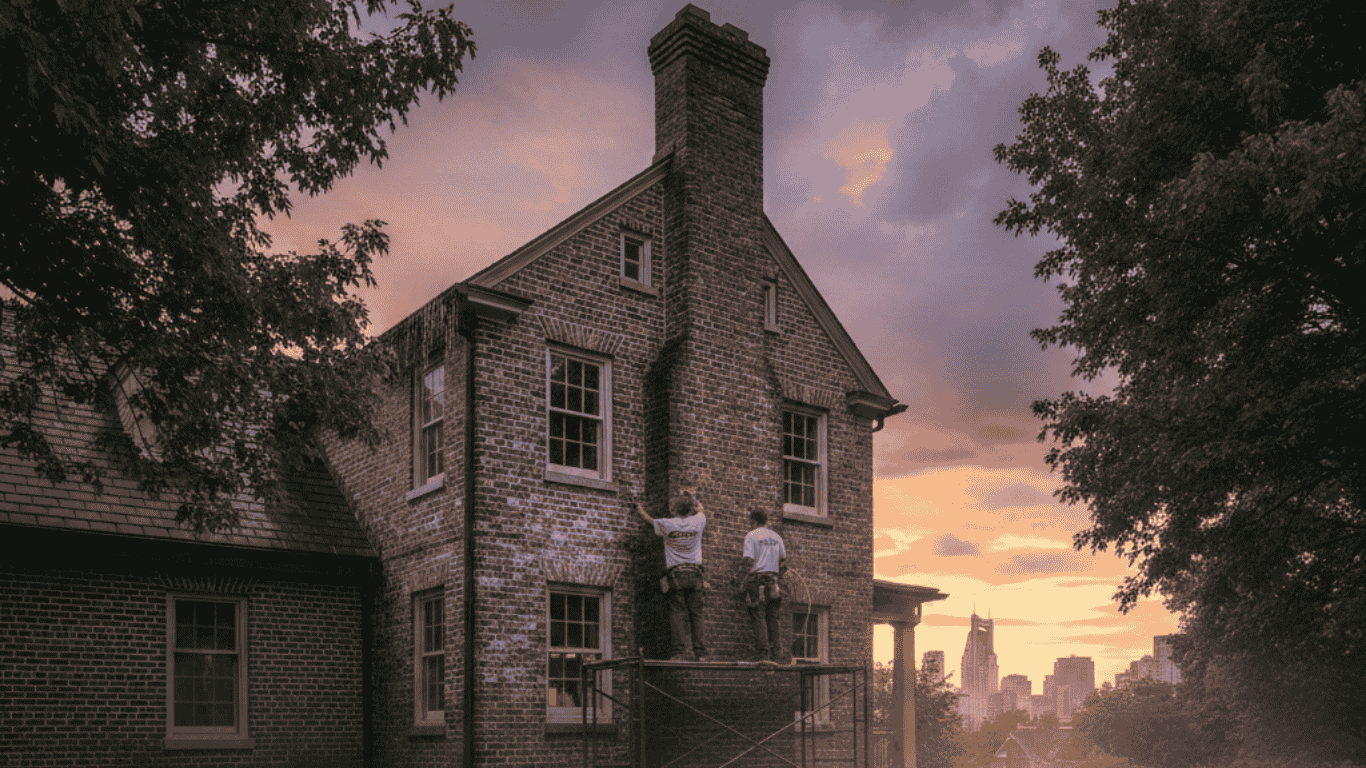
Did you know that Tennessee experiences an average of 60 to 70 freeze-thaw cycles every single year? While most homeowners worry about their HVAC units or lawn care during the changing seasons, the very bones of your house are silently fighting a war against the elements.
Nashville masonry is legendary for its beauty, but the local climate is a master at finding every microscopic crack in your brickwork and turning it into a costly renovation project. Understanding how moisture and temperature dance together in the Music City is the first step toward keeping your sanctuary standing tall for the next century.
The Invisible Sponge Effect in Middle Tennessee
Nashville ranks among the more humid cities in the interior United States, and this moisture acts like a slow-motion wrecking ball for porous materials. Brick and natural stone might feel solid, but they function much like a hard sponge. When the humid summer air settles over the Cumberland River, your masonry absorbs water vapor.
If that moisture remains trapped, it can cause efflorescence. You might have seen those white, powdery streaks on local retaining walls or chimneys, which are salt being pushed out of the masonry as water evaporates. If left unaddressed, these salt deposits can cause the face of the brick to pop off, a process professionals call spalling. Recent industry research found that, in the early stages, 40% of masonry failures in the Southeast are directly linked to improper moisture management and poor drainage.
The Concrete Seesaw of Temperature Shifts
Tennessee weather is notoriously unpredictable, with a common 40-degree temperature swing in a single afternoon, creating a seesaw effect that keeps your masonry constantly expanding and contracting. Mortar joints are designed to be the sacrificial lamb in this scenario. They are softer than the bricks, so they take the brunt of the movement to prevent the bricks from cracking.
When water enters a tiny crack during a rainy Nashville Tuesday and then freezes on a Wednesday night, it expands by approximately 9%. It creates an immense internal pressure that can widen gaps instantly. Over several winters, these micro-fissures become gateways for structural instability. A case study of historic homes in the Germantown area found that chimneys are often the first to fail in this cycle, as they are exposed to wind and cold on all four sides.
Why Quality Craftsmanship Is a Local Necessity
Protecting a home in this region requires more than just slapping some cement between bricks. It demands an understanding of local soil expansion and specific humidity levels.
For those looking to fortify their property, consulting with Masonry Nashville specialists ensures that the materials used are compatible with the existing structure. These Pros excel at this by utilizing breathable mortars and advanced sealing techniques that allow internal moisture to escape while blocking external rain. Also, their approach combines old-world artistry with modern science, making them the premier choice for homeowners who value longevity over a quick, cheap fix.
How often should I waterproof my Nashville brick home?
Most experts recommend a professional inspection every three to five years. If you live in a particularly low-lying or shaded area of Nashville, you may need to apply a silane-based water repellent more frequently to combat persistent dampness.
What are the signs of structural masonry damage?
Look for stair-step cracks in the mortar joints, leaning chimneys, or bricks that have become loose to the touch. If you see “weep holes” at the bottom of your walls being clogged with dirt or debris, clear them immediately to allow proper drainage.
The Checklist for Weatherproofing Your Walls
- Inspect the flashing: Ensure the metal transitions around your roof and windows are diverting water away from the masonry.
- Clear the gutters: Overflowing gutters are the leading cause of saturated foundation bricks.
- Monitor the mortar: If you can scrape the mortar away with a fingernail, it is time for professional tuckpointing.
- Check for vegetation: Ivy looks charming, but its roots can pry apart weakened mortar joints over time.
Comparison of Weather Impact on Masonry Materials
| Material Type | Moisture Resistance | Thermal Expansion Risk | Nashville Suitability |
| Traditional Red Brick | Moderate | High | Excellent (if maintained) |
| Limestone | High | Medium | High (very durable) |
| Concrete Block | Low | Low | Moderate (requires sealing) |
| Manufactured Stone | Low | Medium | Fair (prone to moisture traps) |
Final Takeaway
Every home in the Music City tells a story, and the masonry is the parchment it is written on. While the Tennessee climate presents a unique set of hurdles, from sudden ice storms to thick summer humidity, these challenges are far from insurmountable. By staying proactive with routine inspections and monitoring your home’s expansion and contraction, you can prevent minor moisture issues from escalating into structural damage.
Investing in high-quality restoration and weatherproofing today helps ensure your property remains part of the Nashville landscape for generations to come. After all, a house is a legacy that deserves a foundation as resilient as the city itself.