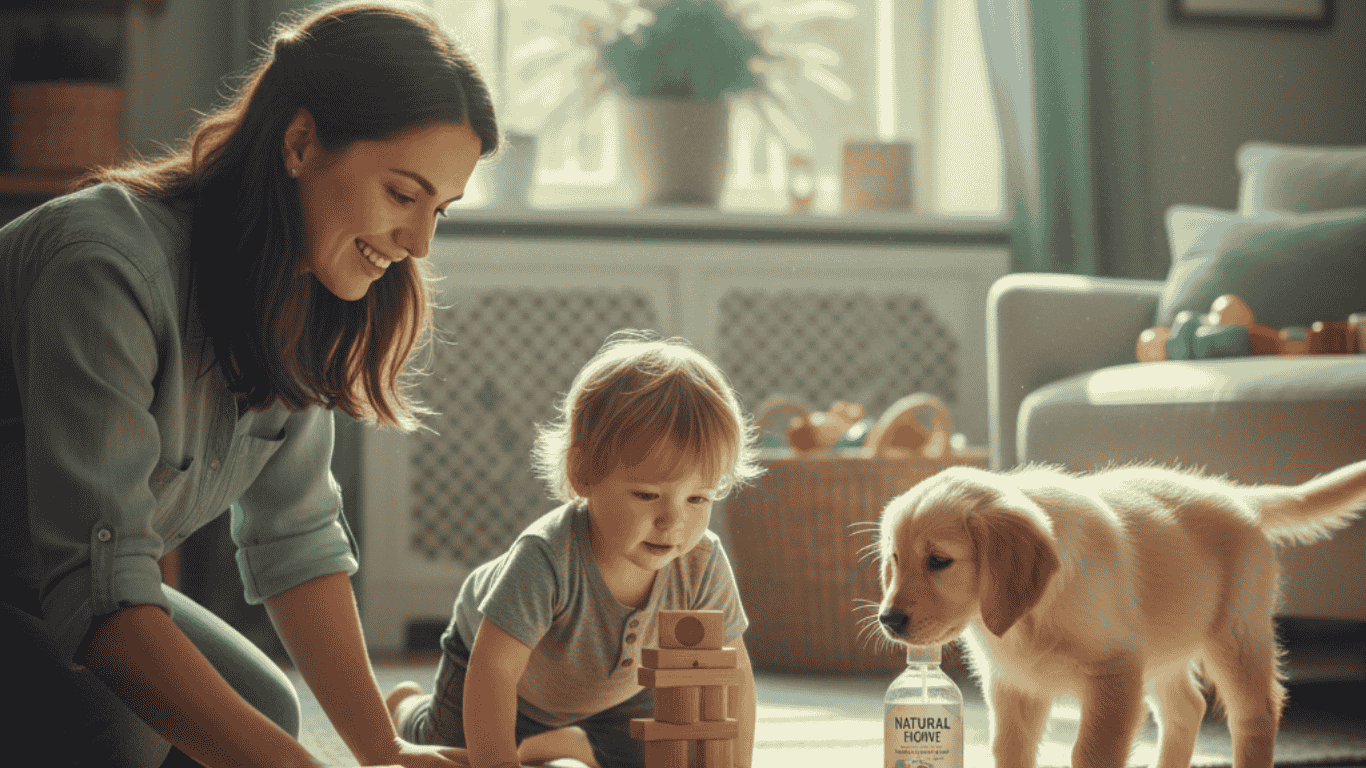
Have you ever scrubbed your kitchen floor only to realize your toddler is crawling across the damp tiles two minutes later, or your puppy is licking the very spot you just sanitized?
Most of us view cleaning as the ultimate act of care, yet the irony is that our quest for a germ-free home often introduces invisible hazards. For households with curious kids and low-to-the-ground pets, the traditional cleaning caddy is often a source of respiratory irritants and skin irritants. Making the switch to safer alternatives is a necessary evolution for a healthy indoor environment.
The Hidden Impact of Harsh Chemicals on Small Bodies
Children and pets have higher metabolic rates and spend significant time in direct contact with floors. When we use standard industrial-strength bleaches or ammonia-based window cleaners, we often leave behind residues that can be absorbed through paws or tiny hands.
Furthermore, the global market for sustainable cleaning products is projected to reach $111.2 billion by the end of 2026, reflecting a massive shift as parents realize that clean shouldn’t have a chemical scent.
What Makes Cleaning Products Dangerous For Pets And Kids?
Many popular sprays contain phthalates for fragrance or quaternary ammonium compounds for disinfection. These can trigger asthma in children or cause severe paw irritation in dogs.
Statistics show that the EPA’s Safer Choice program aims to certify over 2,300 products by late 2026, providing a much-needed roadmap for families. Using these certified items ensures that every ingredient has been screened for human health and environmental safety.
Can You Disinfect Your Home Safely Without Bleach?
The short answer is yes. While we often associate the smell of chlorine with safety, it can be incredibly taxing on a cat’s sensitive respiratory system or a child’s developing lungs. You can maintain high levels of hygiene by using stabilized hydrogen peroxide or citric acid-based disinfectants. These alternatives break down into water and oxygen, or into simple organic salts, leaving no toxic residue.
- Steam Cleaning: Use a high-heat steam mop to sanitize floors, killing 99.9% of bacteria with only water.
- Enzymatic Cleaners: These are ideal for pet accidents because they break down organic matter rather than just masking the odor.
- Vinegar and Water: A classic 50/50 mix works well for windows, but avoid it on natural stone such as marble.
How Do You Keep Pets Safe While Cleaning?
A great rule of thumb is the Wait for the Dry policy. Even safer cleaners can be slippery or irritating if licked directly. Always secure your pets and kids in a different room until the surfaces are completely dry to the touch. This simple habit prevents most accidental ingestions reported to poison control centers each year.
Creating a Kid-Friendly and Pet-Safe Cleaning Routine
Transitioning to a non-toxic lifestyle does not happen overnight, and it doesn’t have to be expensive. In fact, many professional cleaners are moving toward “green” kits because they are better for their health. Start by swapping out your most-used items, such as multi-surface sprays and laundry detergents. Since kids often sleep in their clothes and pets roll on blankets, choosing fragrance-free, plant-based detergents can significantly reduce skin sensitivity.
Is It Safe To Use Essential Oils For Cleaning Around Cats?
This is a common point of confusion. While lemon and lavender are popular, certain oils, such as tea tree, peppermint, and cinnamon, can be toxic to cats and dogs when used in high concentrations. Stick to hydrosols or simply fresh lemon juice for that bright, clean scent without the risk.
By focusing on mechanical cleaning, like using high-quality microfiber cloths that trap dirt with less liquid, you reduce the overall chemical load in your home. Your home will be clean, and you can breathe easier knowing that the only thing your family is picking up from the floor is their toys.